
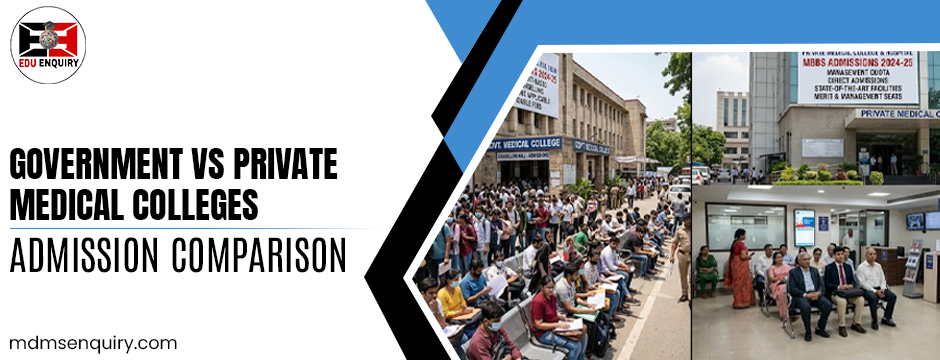
Choosing the right medical college is one of the most important decisions for students aspiring to build a career in medicine. After qualifying for medical entrance examinations, candidates often face a major choice between government and private medical colleges. Both options offer recognised medical education, clinical exposure, and opportunities to develop professional skills.
However, there are significant differences in areas such as admission process, fees, infrastructure, competition, facilities, and learning environment. Understanding these differences with the help of college admission experts helps students and parents make an informed decision based on their academic goals, financial situation, and career plans.
Government medical colleges are known for affordable education and strong patient exposure, while private medical colleges often provide modern infrastructure and additional facilities. This admission comparison explains the key differences between government and private medical colleges to help medical aspirants understand their options and choose the right path for their medical journey.

Admission Process in Government Medical Colleges
Government medical colleges generally follow a highly competitive admission process. Students must qualify through national-level medical entrance examinations and secure a suitable rank to obtain admission.
Admission is usually based on:
- Entrance examination scores
- Merit ranking
- Reservation policies
- Counselling procedures
- Seat availability
Due to limited seats and high demand, government medical colleges often have very high cut-off requirements. Students need strong academic preparation and excellent examination performance to secure admission.
The counselling process is conducted through authorised bodies, where candidates select colleges based on their rank, preferences, and available seats.
Admission Process in Private Medical Colleges
Private medical colleges also admit students through medical entrance examinations and counselling procedures. Candidates must meet the required eligibility criteria and obtain a qualifying score.
The best admission services India generally involves:
- Entrance examination qualification
- Central or state counselling
- College selection based on availability
- Fee payment and documentation
Compared to government colleges, private medical colleges may have more available seats. However, admission requirements and fee structures vary depending on the institution.
Students should carefully research college recognition, academic quality, and facilities before making a decision.
Difference in Fee Structure
One of the biggest differences between government and private medical colleges is the cost of education.
Government medical colleges usually have significantly lower tuition fees because they receive support from government funding. This makes medical education more affordable for many students.
Private medical colleges generally have higher fees due to investment in infrastructure, technology, faculty, and facilities. The total cost may include tuition fees, hostel charges, laboratory fees, and other academic expenses.
Students should consider their financial capacity and explore available scholarship options with college admission experts before selecting a college.
Competition and Seat Availability
Government medical colleges typically have intense competition because they offer quality education at affordable costs.
Thousands of students compete for a limited number of seats, making admission highly challenging. Candidates often need exceptional entrance exam scores to secure a place.
Private medical colleges generally have a larger number of seats, which can provide more opportunities for eligible candidates. However, students must still meet admission requirements and choose institutions carefully.
Infrastructure and Facilities
Infrastructure plays an important role in medical education. Government medical colleges often have established campuses, experienced faculty members, and large teaching hospitals with high patient volumes. However, some institutions may have older infrastructure due to long-standing operations.
Private medical colleges often invest heavily in modern facilities, advanced laboratories, simulation centres, digital learning resources, and updated infrastructure.
The quality of facilities can vary between individual colleges, so students should evaluate each institution separately.
Clinical Exposure and Practical Training
Clinical experience is essential for medical students because it develops practical skills and patient-handling abilities.
Government medical colleges usually have associated hospitals with a high number of patients. The best admission services India provide students with extensive exposure to different medical conditions and treatment procedures.
Private medical colleges also provide clinical training through attached hospitals. The level of exposure depends on hospital capacity, patient flow, and available departments.
Students should consider the quality of clinical training before selecting a medical college.

Faculty and Teaching Quality
Both government and private medical colleges can have experienced and qualified faculty members.
Government institutions often have senior professors with extensive teaching and clinical experience. Private colleges may also offer skilled faculty supported by modern teaching methods.
The overall learning experience depends on factors such as faculty availability, student support, teaching approach, and academic environment.
Career Opportunities After Graduation
A medical degree from a recognised government or private medical college can provide opportunities for further education and professional growth.
Graduates can pursue:
- Postgraduate medical education
- Specialisation programmes
- Clinical practice
- Research opportunities
- Healthcare management careers
The reputation of the institution, academic performance, practical experience, and individual skills all contribute to future career development.
Government vs Private Medical Colleges: Which Is Better
There is no single answer because the right choice depends on individual circumstances.
Government medical colleges may be better suited for students who prioritise affordable education, strong patient exposure, and competitive academic environments.
Private medical colleges may be suitable for students who prefer modern infrastructure, additional facilities, and alternative admission opportunities.
Before choosing a college, students should consider:
- Budget and financial planning
- College reputation
- Hospital facilities
- Faculty experience
- Clinical exposure
- Career goals
A well-researched decision sourced from college admission experts can help students build a successful medical career.
How Professional Guidance Helps During Medical Admissions
Medical admissions can be complex due to counselling procedures, seat selection, eligibility requirements, and documentation.
Professional guidance can help students understand available options, compare colleges, avoid common mistakes, and make better admission decisions.
Expert support can simplify the process and help candidates choose institutions that match their academic goals and preferences.
Conclusion
Government and private medical colleges both offer support of college admission experts for students who want to pursue a career in medicine. Government institutions provide affordable education and extensive clinical exposure, while private colleges often offer advanced facilities and flexible admission opportunities. The best choice depends on a student’s academic performance, financial situation, career objectives, and personal preferences.
Students seeking expert assistance with medical college selection, admission guidance, counselling support, and informed decision-making, they can trust us at MDMSenquiry. We provide professional guidance to help medical aspirants navigate the admission process effectively. To learn more about these aspects, visit our website now.
FAQs
Both government and private medical colleges have advantages. Government colleges offer affordable fees and strong clinical exposure, while private colleges may provide modern infrastructure and additional facilities.
Both require a medical entrance examination qualification, but seat availability, cut-offs, counselling procedures, and fee structures may differ.
Government medical colleges have limited seats, lower fees, and strong reputations, making them highly preferred among medical aspirants.
Yes, many private medical colleges provide quality clinical training through affiliated hospitals. Exposure level depends on hospital facilities and patient availability.
Students should consider factors such as fees, infrastructure, faculty, hospital facilities, location, reputation, and future career goals before making a decision.