
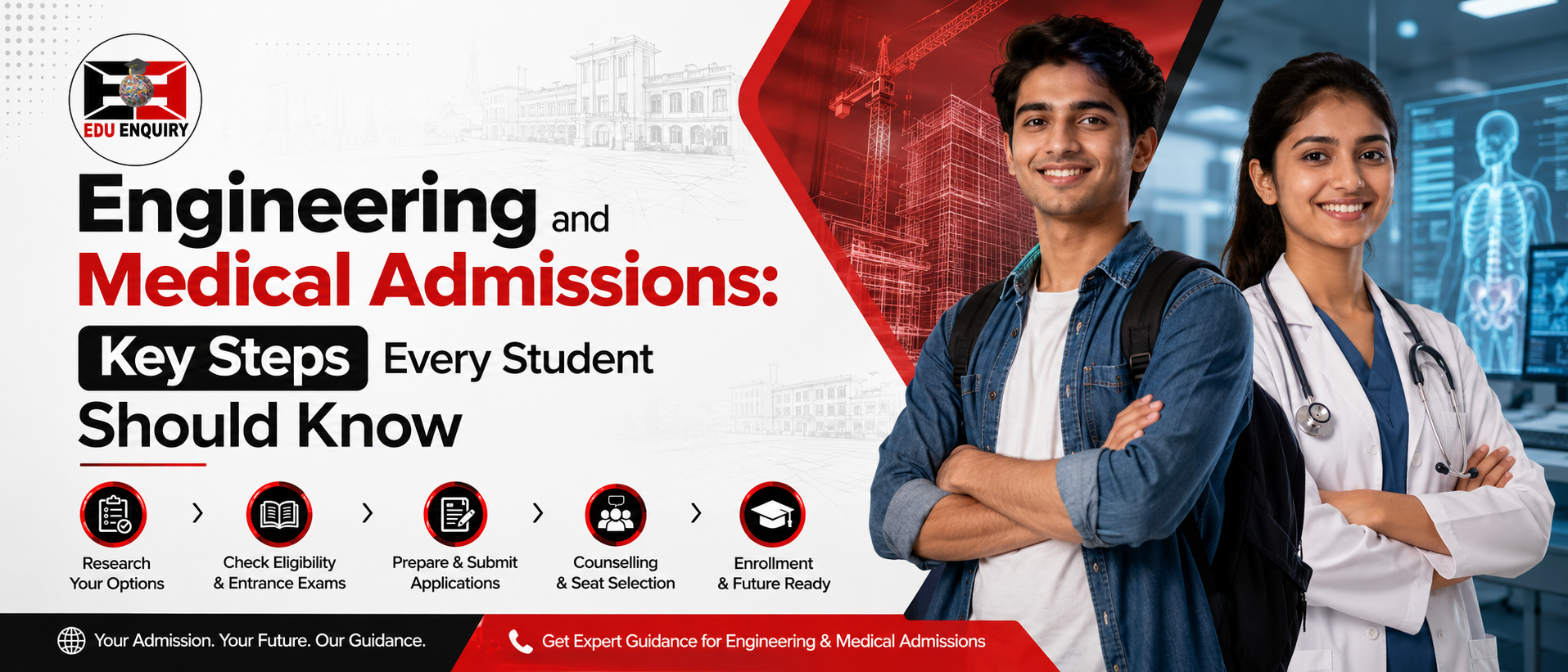
For many students, the admission process involves several stages, from selecting the right course and preparing for entrance examinations to completing counselling and choosing a suitable college. Careful planning at every stage can help students make confident and informed decisions about their future. Understanding eligibility requirements, important deadlines, examination patterns, fees, facilities, and career opportunities is essential before finalising a college or course. By starting preparation early and staying organised throughout the process, students can reduce confusion and avoid common admission mistakes. Overall, a well-planned approach can make Engineering and medical admissions more manageable and help students move confidently toward their academic and career goals.

Understand Your Course and Career Goals
The first step is to understand which course matches your interests, strengths and long-term goals. Engineering offers disciplines such as computer science, mechanical engineering, civil engineering, electronics and electrical engineering.
Medical education includes options such as MBBS, BDS, AYUSH courses and other healthcare programmes. Each field has different academic requirements and career opportunities.
Students should consider their favourite subjects, learning preferences and career expectations before selecting a course. Speaking with teachers, parents or qualified counsellors can also provide useful perspectives.
Check the Eligibility Criteria
Before applying for engineering and medical admissions, carefully review the eligibility requirements for your chosen course. These requirements can include subjects studied in Class 12, minimum marks, age criteria and other conditions.
For many engineering courses, students need to have studied subjects such as Physics, Chemistry and Mathematics. Medical applicants generally need subjects including Physics, Chemistry and Biology or Biotechnology.
However, requirements can vary between institutions and admission routes. Always check the latest official admission information before submitting an application.
Identify the Required Entrance Examination
Entrance examinations play a major role in admissions. Engineering applicants may need to appear for national, state, or university-level entrance examinations.
Medical aspirants looking to pursue postgraduate medicine courses generally need to follow the applicable national admission and examination system for undergraduate medical courses. The examination score or rank can influence eligibility and college choices.
Students should identify the examinations relevant to their preferred courses well in advance. They should also understand the syllabus, examination pattern, marking scheme, and important dates.

Prepare for Entrance Examinations
Once the required examination is identified, students should create a realistic preparation schedule. Begin by reviewing the entire syllabus and breaking it down into manageable topics.
Regular revision is essential. Students should also solve previous question papers and practise mock tests to improve speed and accuracy.
Furthermore, tracking performance can help identify weaker subjects. Extra attention can then be given to difficult topics without neglecting stronger areas.
A consistent study routine is generally more effective than last-minute preparation. Students should also maintain healthy study habits and allow enough time for revision before the examination.
Complete the Application Process Carefully
After preparing for the examination, students must complete the application process within the specified deadline. Application forms usually require personal, academic, and examination-related information.
Double-check all the information to ensure it is accurate before submitting the form. Errors in names, dates, marks, or other information may create complications later.
Students should also upload documents in the required format and size. Keep copies of submitted forms, payment receipts, and important application details for future reference.
Most importantly, do not wait until the final day to submit an application. Technical problems or missing documents can cause unnecessary stress.
Research Colleges Before Making a Choice
A good entrance rank does not automatically mean that every available college will be suitable. Students should research colleges before participating in counselling or accepting an admission offer.
Consider factors such as accreditation, academic reputation, faculty, infrastructure, location, course structure and available facilities.
For engineering students, placement opportunities, laboratories and industry exposure may be important. Medical students may also consider teaching hospitals, clinical exposure and available facilities.
Fees are another important factor. Compare tuition fees and other expenses with the overall academic and career benefits of the institution.
Understand the Counselling Process
Counselling is one of the most important stages of engineering and medical admissions. Depending on the course and admission route, counselling may be conducted through national, state or institutional authorities.
Students may need to register separately for counselling and submit their preferred colleges and courses.
Choice filling should be approached strategically. Students should create a list based on their preferences, entrance rank, eligibility, and realistic admission possibilities.
Keep checking official notifications during the counselling period. Missing a registration, choice-filling, or document-verification deadline can affect admission opportunities.
Keep Your Documents Ready
Document verification is an essential part of the admission process. Commonly required documents may include academic certificates, entrance examination results, identity proof, photographs, and category-related certificates where applicable.
The exact requirements can differ by course and institution. Therefore, students should prepare a document checklist based on the official instructions.
Keep both physical and digital copies where appropriate. Organising documents early can make verification and reporting much easier.
Compare the Final Admission Options
Students may sometimes receive multiple college or course options. Instead of choosing the first available seat, compare the options carefully.
Look at course quality, fees, location, facilities, academic environment, and future opportunities. Consider whether the institution fits your academic and financial requirements.
It is also important to understand the admission rules before paying fees or confirming a seat. Read the relevant terms and refund policies carefully.
Stay Updated Until Admission Is Confirmed
The admission process does not end immediately after receiving a provisional allotment. Students may still need to complete fee payments, document verification, reporting, and other formalities.
Keep monitoring official websites and notifications throughout the process. Admission schedules can change, and additional counselling rounds may be announced.
Staying organised can help prevent avoidable mistakes and ensure that every required step is completed on time.
Conclusion
Engineering and medical admissions can seem complicated when students are unfamiliar with the process. However, careful planning can make each stage easier to manage. Start by choosing the right course, checking eligibility, and understanding the relevant entrance examination. Then focus on timely applications, thorough preparation, college research, and informed counselling choices.
Students should also keep their documents organised and monitor official notifications throughout the admission cycle. Making decisions based on accurate information can help avoid common admission mistakes.
For reliable guidance on engineering and medical admission opportunities, college selection and counselling, one can trust us at MDMS Enquiry. We can help students navigate the process with greater clarity. Visit our website now to explore admission-related information and make more informed academic decisions.
FAQs
The main steps generally include selecting a course, checking eligibility, identifying entrance examinations, completing applications, preparing for exams, participating in counselling, and confirming admission.
College research helps students compare academic quality, fees, facilities, location, placement opportunities, and other factors before making an informed decision.
Students should ideally begin preparation well before the examination date. Starting early provides sufficient time for learning concepts, practising questions, and revising the syllabus.
Counselling helps eligible students select courses and colleges based on factors such as examination rank, preferences, availability and applicable admission rules.
Yes. Eligibility criteria, fees, application procedures and other requirements can vary between institutions and admission authorities. Students should always verify current requirements.