
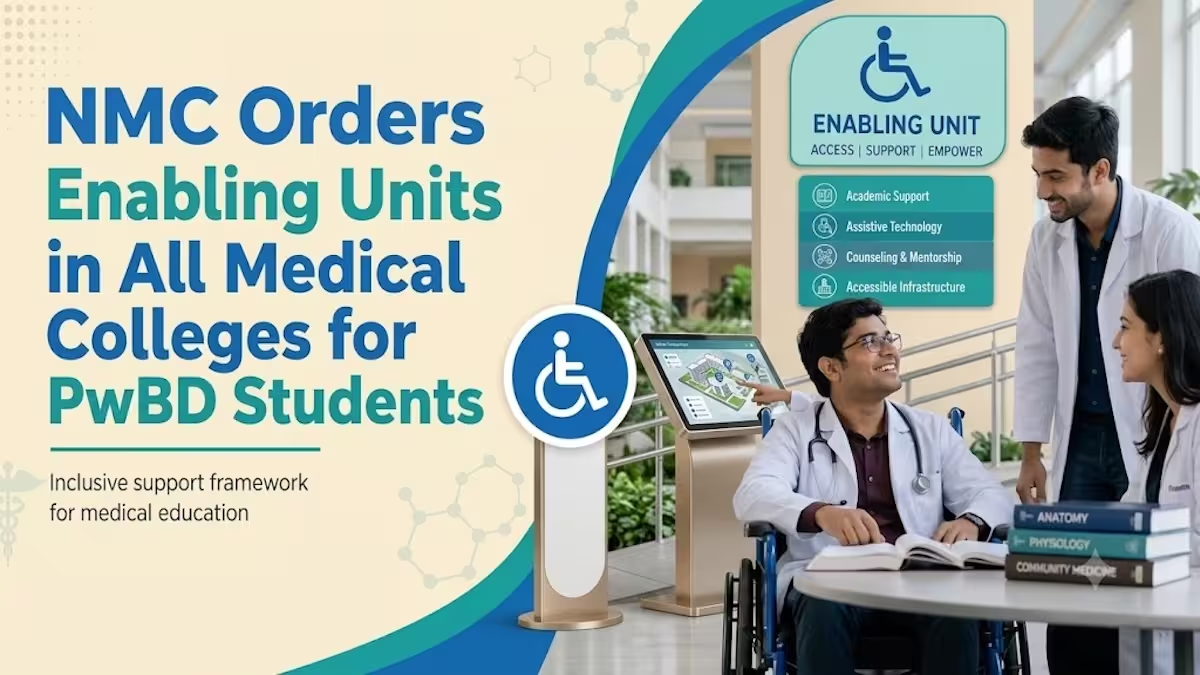
In a landmark move towards inclusive medical education, the National Medical Commission (NMC) has directed all medical colleges and institutions under its regulation to establish dedicated “Enabling Units” for students with benchmark disabilities (PwBD).
Issued on July 27, 2026, this directive marks a significant shift in how medical institutions approach disability inclusion. For the first time, every medical college in India will have a single point of contact to support students with disabilities throughout their academic journey—from classroom teaching and clinical training to internships and examinations.
This comprehensive guide explains everything you need to know about NMC’s Enabling Units, including what they are, how they work, and what they mean for PwBD students seeking medical education in 2026 and beyond.
What is an Enabling Unit?
An Enabling Unit is a dedicated support system within each medical college that acts as a single point of contact for students with benchmark disabilities. It is designed to ensure that disabled students receive the academic, clinical, and administrative support they need throughout their course.
The concept is rooted in the Rights of Persons with Disabilities (RPwD) Act, 2016 and recent Supreme Court directives, which mandate educational institutions to provide inclusive education, reasonable accommodation, and an accessible learning environment for persons with disabilities.
“All medical colleges/institutions regulated by the National Medical Commission are directed to constitute an Enabling Unit within the institution.” – NMC Circular, July 27, 2026
Why Were Enabling Units Mandated?
Legal Framework
The NMC’s directive is built on a strong legal foundation:
| Legal Provision | Relevance |
|---|---|
| RPwD Act, 2016 – Sections 16 & 17 | Mandates educational institutions to provide inclusive education, reasonable accommodation, and accessible learning environments |
| Om Rathore v. DGHS & Ors. | Supreme Court ruled that Disability Assessment Boards must evaluate functional competency using assistive devices, not disqualify based solely on disability quantification |
| Anmol v. Union of India & Ors. (July 21, 2026) | Supreme Court directed all medical colleges to constitute Enabling Units; NMC complied after one year and nine months |
Why It Matters
The Enabling Unit mandate addresses a critical gap in medical education. Previously, students with disabilities had to approach faculty or administration separately for accommodations, often facing uncertainty and discrimination. The Enabling Unit now provides a structured, confidential, and non-discriminatory mechanism for students to request and receive the support they need.
Key Responsibilities of the Enabling Unit
The NMC has outlined several responsibilities for Enabling Units to ensure comprehensive support for PwBD students.
1. Facilitate Reasonable Accommodation
- Ensure barrier-free access within the institution
- Provide academic and clinical support measures
- Coordinate with faculty and hospital administration for timely implementation
2. Address Disability-Specific Requests
- Receive and address requests for accommodations during classroom teaching, clinical training, internships, and examinations
- Maintain confidential records of requests and accommodations provided
3. Information Dissemination
- Share information about the Enabling Unit’s role and contact details with all students at the time of admission
- Display details prominently on the institution’s website and notice boards
4. Coordination & Compliance
- Coordinate with the designated Disability Assessment Board, faculty, and hospital administration
- Ensure timely implementation of accommodations in accordance with the RPwD Act, 2016, and NMC guidelines
What This Means for PwBD Students
For Current Students
- Single Point of Contact: Every college now has a dedicated unit to help with accommodation needs
- Confidential Support: Requests and accommodations are handled with confidentiality and non-discrimination
- Clinical Accommodations: Support extends to clinical training and internships, not just classroom learning
For Prospective Students (MBBS 2026)
- Eligibility Assessment: Candidates must have at least 40% benchmark disability and possess a valid Permanent Unique Disability Identity (UDID) Card
- Functional Assessment: Eligibility is determined by functional ability, not disability type or percentage alone
- Eligibility Certificate: Successful candidates receive an Eligibility Certificate (replacing the Disability Certificate) categorizing them as:
- Eligible
- Eligible with Reasonable Accommodation
- Ineligible (with written reasons)
Important Clarification
No candidate can be declared ineligible solely on the basis of disability type or percentage. Any adverse decision must be supported by a functional assessment.
Appeal Mechanism
Candidates dissatisfied with the Medical Assessment Board’s decision may file an appeal before the Appellate Authority constituted by the Directorate General of Health Services (DGHS).
Responsibilities of Medical Colleges
The NMC has directed all medical colleges to:
| Requirement | Details |
|---|---|
| Establish Enabling Unit | Constitute a functional Enabling Unit within the institution |
| Appoint Nodal Officer | Appoint a designated officer to address disability-related concerns |
| Ensure Accessibility | Provide barrier-free infrastructure and reasonable accommodation |
| Publicise the Unit | Display contact details on websites and notice boards |
| Maintain Records | Keep confidential records of accommodation requests |
| Establish Grievance Mechanism | Handle complaints related to disability assessment, discrimination, or denial of accommodation |
| Coordinate with Authorities | Liaise with Disability Assessment Boards and other competent authorities |
Timeline of Key Events
| Date | Event |
|---|---|
| 2024 | Supreme Court judgment in Om Rathore v. DGHS – ruled against disqualification based solely on disability quantification |
| July 21, 2026 | Supreme Court order in Anmol v. Union of India – directed all medical colleges to constitute Enabling Units |
| July 27, 2026 | NMC issues circular mandating Enabling Units and releases new PwBD assessment guidelines |
| July 28, 2026 | News of the directive is widely reported across major media outlets |
| Ongoing | Medical colleges are establishing functional Enabling Units |
Frequently Asked Questions
Q1. What is an Enabling Unit?
A: An Enabling Unit is a dedicated support system within each medical college that acts as a single point of contact for students with benchmark disabilities, facilitating reasonable accommodation, academic and clinical support, and barrier-free access.
Q2. Why did the NMC mandate Enabling Units?
A: The directive is in compliance with the Rights of Persons with Disabilities Act, 2016 (Sections 16 & 17), and follows Supreme Court orders in Om Rathore v. DGHS and Anmol v. Union of India.
Q3. What support can students expect from an Enabling Unit?
A: Students can expect assistance with reasonable accommodation, academic and clinical support measures, barrier-free access, disability-specific accommodations during clinical training and internships, and confidential handling of their requests.
Q4. Will every medical college have an Enabling Unit?
A: Yes. The NMC has directed all medical colleges and institutions under its regulation to establish Enabling Units.
Q5. What is the eligibility for PwBD quota in MBBS?
A: Candidates must have at least 40% benchmark disability and a valid UDID Card. Eligibility is determined through functional assessment, not disability type or percentage alone.
Q6. Can I appeal if I am declared ineligible?
A: Yes. Candidates can appeal before the Appellate Authority at the Directorate General of Health Services (DGHS).
Q7. When was this directive issued?
A: The NMC issued the circular on July 27, 2026, following the Supreme Court order of July 21, 2026.
Disclaimer: This article is based on publicly available information as of August 2026. Admission policies, guidelines, and other details are subject to change. Readers are strongly advised to verify all information through official NMC, MCC, and government channels before making any admission decisions. The NMC’s directive represents a significant step toward inclusive medical education, but implementation may vary across institutions.
| Disclaimer: The information shared here is collected from multiple reliable sources for educational and informational purposes. While we strive to provide accurate and updated details, some information may change over time. If you notice any incorrect data or discrepancies, please contact us at mbbsenquiry1[@]gmail.com so our team can review and update the information accordingly. Read More |